31 Aug 2026
Swiss License Conditions and Their Role in Shaping Responsible Gaming Tools Across Digital Poker and Sports Betting Environments

Swiss federal licensing requirements establish clear standards that operators must meet before offering digital poker and sports betting services to residents, and these conditions directly influence the design and deployment of responsible gaming features across platforms. The Federal Act on Gambling, which took effect in 2019, mandates that license holders integrate specific player protection mechanisms into their systems from the outset, creating a structured environment where tools such as deposit caps, session timers, and exclusion lists operate under uniform technical specifications.
Core Elements of Swiss Licensing for Online Platforms
License applicants submit detailed operational plans to the Swiss Federal Gaming Board that outline how they will comply with player protection obligations, and regulators review these submissions for evidence of functional tools before granting approval. Operators must demonstrate that their systems can enforce real-time monitoring of player behavior while maintaining data security standards that align with national privacy laws. This process ensures that every licensed platform incorporates responsible gaming functions as core infrastructure rather than optional add-ons.
Technical audits occur at regular intervals after licensing, and findings from these reviews often lead to adjustments in how tools respond to player activity. For instance, systems handling poker tournaments and sports betting markets must flag patterns that suggest excessive play and trigger automated interventions such as cooling-off periods. Data collected through these mechanisms feeds into annual compliance reports that license holders submit to authorities, providing regulators with metrics on tool effectiveness across different game types.
Integration of Protection Tools in Poker and Sports Betting
Digital poker environments under Swiss licenses require interfaces that allow players to set personal limits on both time and expenditure before entering cash games or tournaments, and these settings remain active across sessions until the player modifies them through verified channels. Sports betting platforms follow similar protocols but adapt them to the event-driven nature of wagering, with tools that pause account activity during high-frequency betting periods or after reaching predefined thresholds. Both formats rely on centralized databases that track exclusion requests, enabling operators to prevent re-entry even when players attempt to create new accounts.
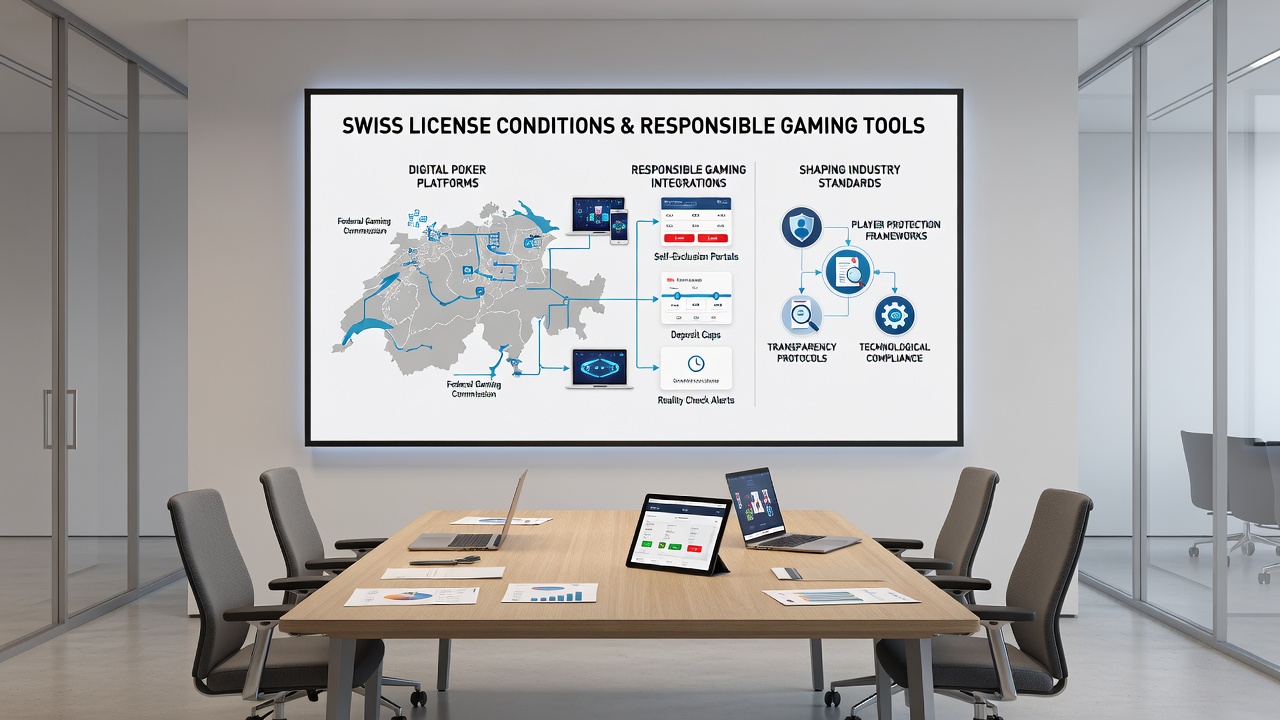
August 2026 marks the start of an enhanced reporting phase where operators must supply granular data on tool usage rates and intervention outcomes to the Federal Gaming Board, a requirement that builds on existing compliance frameworks and encourages further refinement of user interfaces. Researchers examining early implementation data note that platforms have already adjusted notification timing and message wording to improve player response rates without disrupting gameplay flow.
Regulatory Oversight and Cross-Border Comparisons
Swiss authorities maintain a centralized register of licensed operators and their responsible gaming configurations, allowing for consistent enforcement across cantons. This approach differs from models seen in other regions, where Canadian federal and provincial guidelines emphasize voluntary codes alongside mandatory measures. Observers note that the Swiss system places greater weight on pre-licensing validation of technical safeguards, which reduces variability in how tools function once platforms launch.
Industry reports compiled by European trade associations highlight that Swiss license conditions require operators to allocate specific resources toward independent testing of responsible gaming modules, ensuring that updates to poker software or betting algorithms do not compromise existing protections. These testing protocols cover scenarios such as multi-account detection and cross-platform exclusion enforcement, areas that have gained attention as more players engage with both poker and sports betting on the same sites.
Impact on Platform Development and Player Interaction
Developers working within Swiss licensing parameters build responsible gaming functions into the initial architecture of applications rather than layering them on afterward, and this integration influences everything from account registration flows to in-game prompts. Players encounter limit-setting screens during onboarding, and subsequent interactions with poker tables or betting markets trigger reminders based on accumulated activity data. The result is a standardized experience across licensed services that prioritizes consistent access to protective features.
Studies conducted by academic institutions in neighboring countries have examined how similar licensing conditions affect user engagement with protection tools, and findings indicate measurable differences in session duration when automated alerts activate at predefined intervals. Swiss operators incorporate these insights during system upgrades, adjusting parameters to match observed behavioral patterns while staying within regulatory boundaries.
Conclusion
Swiss license conditions continue to guide the evolution of responsible gaming tools in digital poker and sports betting by embedding specific requirements into every stage of platform operation and oversight. As the enhanced reporting obligations take effect in August 2026, operators and regulators will gain additional data points that support further calibration of these mechanisms across the licensed market.