19 Aug 2026
Charting Poker Mechanics and Bonus Triggers Under Swiss License Constraints
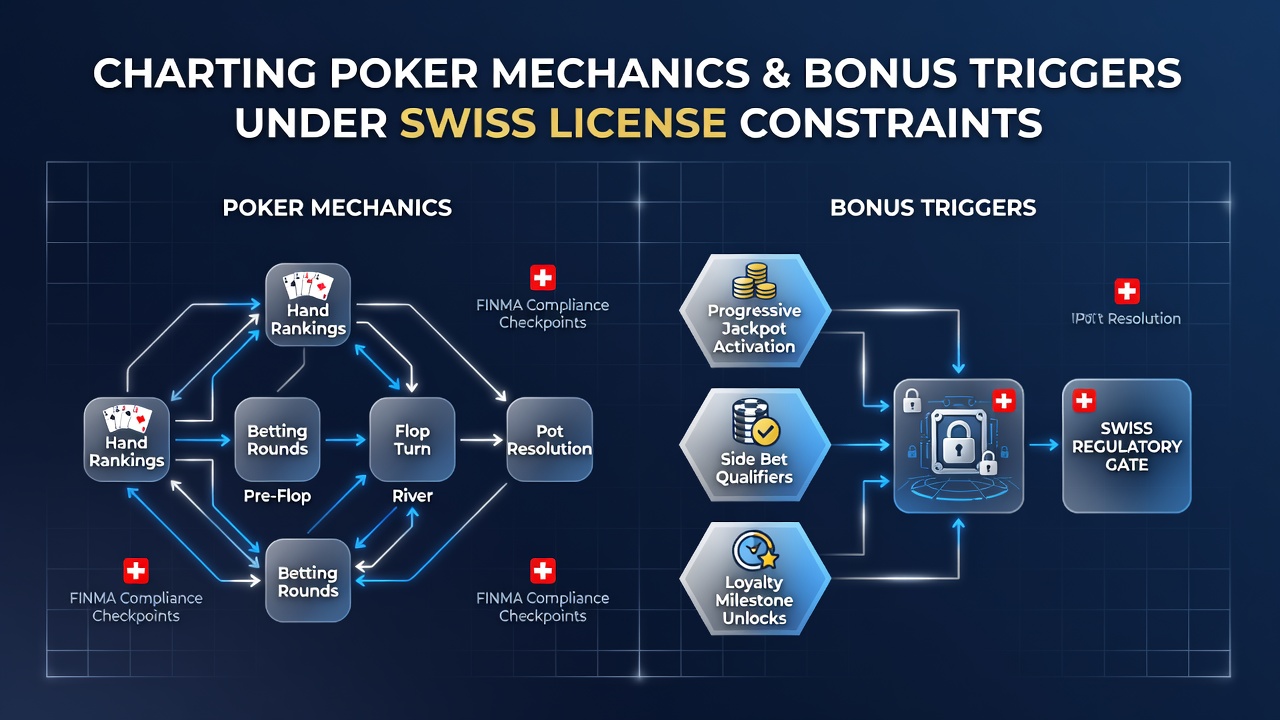
Swiss Licensing Framework for Online Poker
Swiss federal law requires all online poker platforms to operate under licenses issued by the competent cantonal or federal authorities, and these licenses impose strict rules on game integrity, player protection, and promotional mechanics. Operators must demonstrate certified random number generators for card shuffling, while bonus systems face caps on wagering multipliers and mandatory disclosure of trigger conditions before any player deposits funds.
Data from regulatory filings show that licensed platforms integrate poker variants such as Texas Hold'em and Omaha with fixed betting structures that prevent certain side bets or progressive jackpots unless separately approved. These constraints shape how mechanics unfold during play, because every hand must align with approved payout tables that the licensing body reviews annually.
Poker Mechanics Under Licensed Platforms
Game flow begins with ante or blind posting followed by four betting rounds in Texas Hold'em, yet Swiss rules require visible confirmation of deck integrity at the start of each session and prohibit hidden card mechanics that could alter outcomes. Observers note that certified platforms display real-time shuffle verification logs, allowing players to confirm that no external factors influence card distribution.
Betting limits appear in tiers that correspond to player account verification levels, and this tiered approach stems from requirements that limit exposure for newly registered users. Research from gaming oversight bodies indicates that such limits reduce average session duration while maintaining consistent rake percentages across all approved variants.
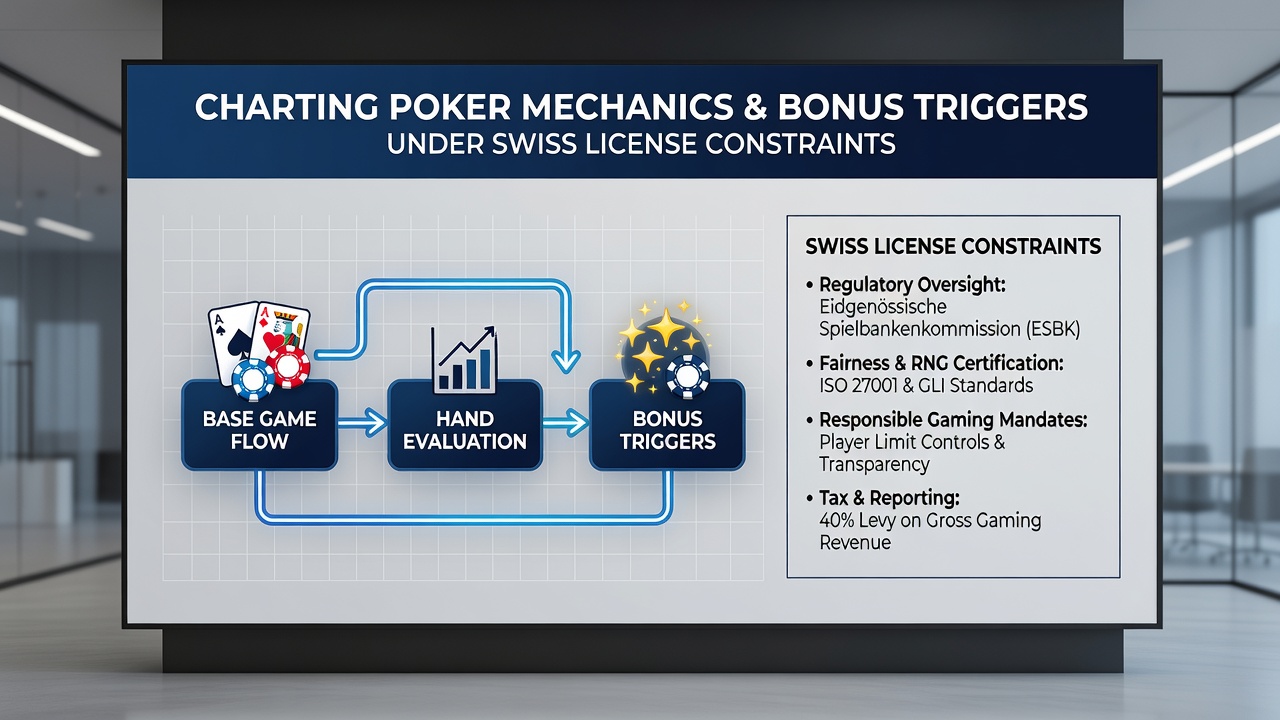
Hand rankings remain standard, although licensed software must log every community card reveal and player action for audit purposes. Those who examine compliance reports find that these logs enable rapid detection of irregularities, and operators face mandatory reporting if any sequence deviates from expected probability curves.
Bonus Trigger Mechanisms and Constraints
Bonus activation typically occurs when players reach predetermined rake thresholds or complete a set number of hands within a calendar month. Swiss licensing conditions require that every trigger condition appear in plain language on the deposit screen, and operators must provide downloadable summaries that detail exact hand counts or rake amounts needed for release.
Figures from licensed operators reveal that most deposit bonuses carry a 20x to 30x wagering requirement calculated solely on poker rake rather than total bets placed. This calculation method prevents inflation of requirements through high-stakes play that does not generate proportional rake. Players often discover that bonus funds convert to cash only after meeting both the hand-count trigger and the wagering multiple simultaneously.
Promotional offers tied to specific poker tournaments must list entry-fee contributions toward bonus progress in advance, and any change to these ratios requires 30 days' notice to existing users. Regulatory updates scheduled for August 2026 will introduce additional verification steps for bonus claims that involve multi-table participation, requiring platforms to confirm each table meets minimum player thresholds before crediting progress.
Compliance Monitoring and Reporting Obligations
License holders submit quarterly reports that break down bonus redemption rates by game type and player cohort. According to data compiled by the Swiss Federal Council gambling oversight portal, redemption rates for poker-specific bonuses average 68 percent when triggers align with actual play volume. Platforms that fall below this benchmark undergo review of their trigger algorithms to ensure they do not create unintended barriers.
External audits performed by accredited testing laboratories verify that bonus engines do not alter game outcomes or favor certain hand distributions. These audits also confirm that players receive automatic notifications when they approach 75 percent of any required trigger threshold, a measure designed to maintain transparency throughout the bonus lifecycle.
Regional Comparisons and Industry Data
Comparisons with frameworks in other jurisdictions highlight how Swiss constraints limit bonus stacking across multiple accounts, because license conditions mandate unique device fingerprinting and cross-account linkage checks. A study released by the Australian Gambling Research Centre notes that similar linkage requirements in comparable markets reduced bonus abuse incidents by 41 percent within the first year of implementation.
Industry associations such as the European Gaming and Betting Association publish annual surveys showing that Swiss-licensed poker rooms maintain lower average bonus values than many other European markets precisely because of the rigid trigger and disclosure rules. These lower values correlate with higher player retention once bonuses convert, because the conditions filter for participants who engage consistently rather than chasing short-term promotions.
Conclusion
Swiss license constraints shape both poker mechanics and bonus triggers through mandatory certification, transparent disclosure, and ongoing audit requirements. Operators must balance player engagement features with regulatory limits that emphasize fairness and protection, resulting in clearly defined hand thresholds, rake-based calculations, and scheduled updates such as those planned for August 2026. The resulting environment provides verifiable game integrity while channeling bonus activity toward sustained play patterns that comply with federal standards.